


What if arriving at A&E could also be the beginning of assessment?
For many patients, the first few minutes in an emergency department are spent waiting to register, repeating personal details and trying to explain what has brought them in.
For busy clinical teams, this means valuable information may not become available until the patient reaches triage.
Streamwave Patient Check-in is designed to change that first interaction.
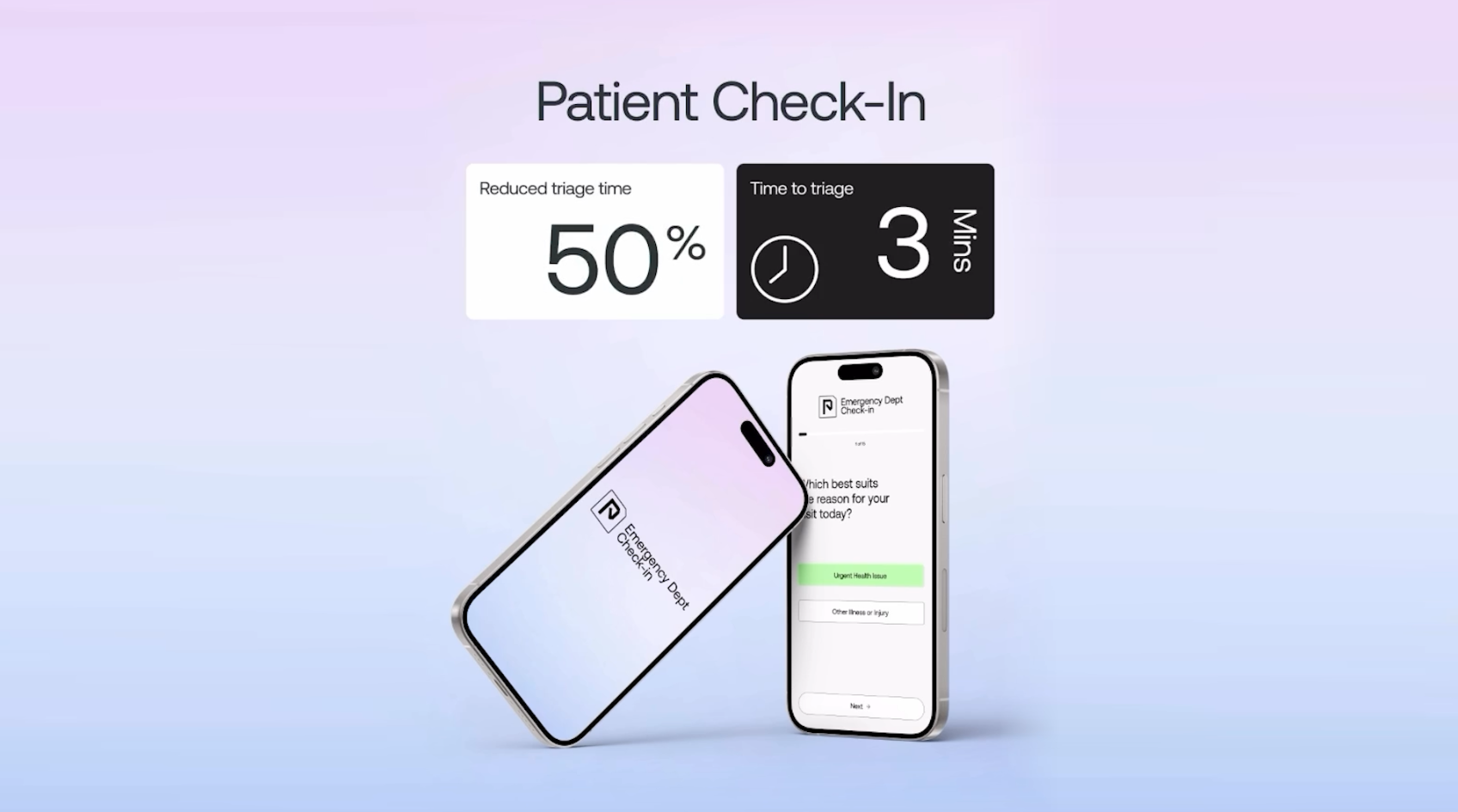
Built by emergency medicine doctors, Patient Check-in allows patients to register and share clinically relevant information from the moment they arrive, using their own smartphone.
No app to download. No new hardware taking up space at the front door. Just a faster, more connected way to begin the care journey.
How does Patient Check-in work?
When a patient arrives, they scan a QR code displayed in the department.
This opens Patient Check-in on their phone, where they can complete their registration and explain what has brought them to hospital. They describe their symptoms in their own words and answer a series of clinically designed questions.
The process creates a digital encounter and gives the clinical team a structured summary of the information provided.
So, instead of waiting until triage to begin gathering the patient’s story, staff can start to understand their needs earlier.
The patient still receives an assessment from an appropriately trained clinician. Patient Check-in does not replace clinical judgement, record clinical observations or make treatment decisions. It gives clinicians meaningful information sooner, helping them prepare for the conversation and make more informed decisions.
What is the experience like for the patient?
Patient Check-in is designed to be simple.
There is no account to create and nothing to install. Patients use their own device, move through the questions at their own pace and have the opportunity to explain what is wrong before their face-to-face assessment.
They can also receive live waiting-time information, helping them feel better informed about what is happening.
It’s important to note, however, that for anyone unable to use Patient Check-in, for example, if they don’t have a smartphone, support from hospital staff and the traditional route to care remains in place. Technology should make access to care easier, not create another barrier.
What difference does it make for clinical teams?
Patient Check-in reduces the amount of manual administration required when someone arrives.
More importantly, it helps the right information reach the clinical team earlier.
That can support faster triage, more focused conversations and earlier recognition of information that may require prompt attention. It also means less time spent asking patients to repeat details they have already provided.
This is not technology for technology’s sake. It is about giving frontline teams more time for patients and removing unnecessary friction from the front door of emergency care.
What results has Patient Check-in delivered?
Patient Check-in has already been rolled out in several NHS Trusts. At St George’s Hospital, more than 180,000 patients have used Patient Check-in and triage times have been reduced by up to 50%.
At Northwick Park Hospital, 6,734 patients completed digital self-registration during the first seven weeks of deployment. The hospital saved an estimated 314 hours of administrative time, with 66% of adults who walked into the department starting the digital registration process.
In July alone, Patient Check-in saved an estimated 203 hours of administrative effort. That is the equivalent of around 27 working days.
Turning arrival into assessment
Patient Check-in cannot solve every source of pressure in urgent and emergency care. But it can make sure valuable time is not lost when a patient arrives.
By helping patients share their story sooner and giving clinical teams access to meaningful information earlier, Patient Check-in turns the front door into the beginning of assessment.
Because in emergency care, every minute matters.